


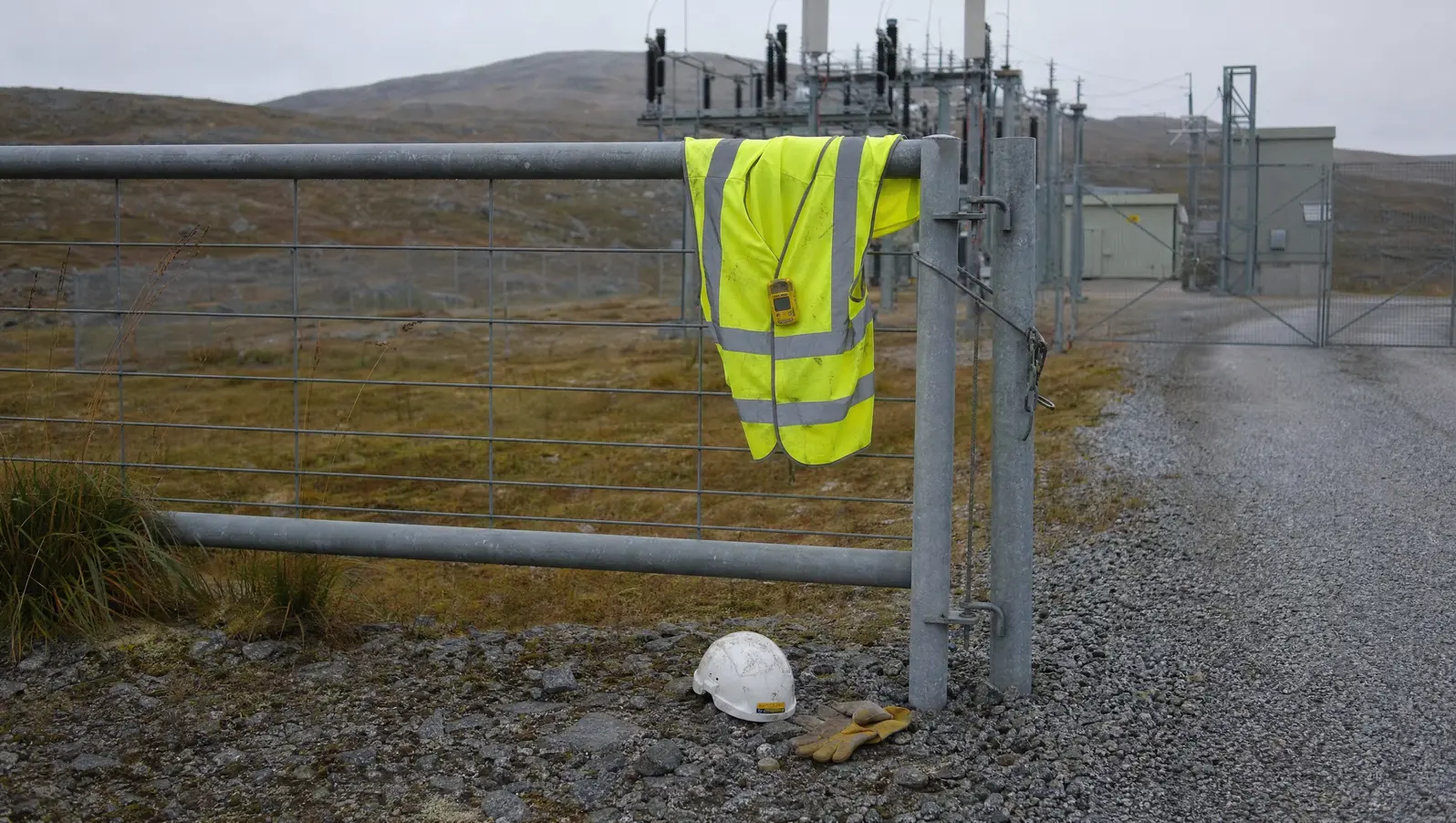
A lone worker device that still places its calls over 2G or 3G is running out of network. The UK's major mobile operators committed to switching 3G off by the end of 2025, and 2G follows unevenly. VoLTE, which carries voice calls over the 4G network, is the replacement, and a migration planned now beats one forced later.
What VoLTE gives a safety device that 2G cannot
VoLTE stands for Voice over LTE, and the name is the mechanism: a voice call travels as data over the 4G network rather than over the separate voice layer that 2G and 3G were built around. Everything else in the safety case follows from that one change.
The immediate difference is that voice and data run at the same time. On 2G and 3G a device generally cannot hold a voice call and a data session together; one blocks the other. On VoLTE both stay open, so a worker can be on a live line to a monitoring centre while the device keeps sending position and sensor readings.
Calls connect faster and sound clearer, which matters when a controller is judging an incident from audio alone.
Battery is the quieter gain. Devices built for modern networks run more efficiently on them and draw less power, and the saving shows up in wearables that have to last a full shift without a charge.
The differences side by side:
| Attribute | 2G or 3G | VoLTE over 4G |
|---|---|---|
| Voice call and live data at the same time | No; one blocks the other | Yes; both stay open |
| Call setup | Slower | Faster |
| Voice clarity | Lower | Clearer |
| Battery draw on a modern device | Higher | Lower |
| Rural reach | Often further, better through walls | Depends on local 4G coverage |
| Long-term network support | Closing, network by network | The current standard |
Where the UK's 2G and 3G timetables actually stand
The dates matter because they are uneven, and uneven dates are what catch fleets out.
3G goes first. The UK's major mobile network operators committed to switching 3G off by the end of 2025, and several finished ahead of the deadline. A device that can only reach 3G has already run out of road.
2G lasts longer, but unevenly. One operator has said its 2G network could run until 2033, while others began withdrawing from 2025. The remaining life of a 2G-only device depends on which network its SIM actually sits on, and that is not something to leave to chance.
The specifics will date quickly, but the lesson holds: sunset dates differ by operator and by country, so a fleet needs a plan that does not assume one calendar governs every device, and roaming devices need that plan more than fixed ones do.
Why voice and data must run at once in an emergency
A lone worker incident asks the device to do several jobs at the same moment, which is exactly what a legacy network cannot give it.
Consider a fall. The motion sensor decides the worker has gone down, and the device opens a voice line so a controller can assess what is happening. While that line stays open, the device should keep sending live position, because responders need where the worker is now, not where they were. On 2G or 3G those two jobs compete for the radio. On VoLTE they run side by side.
The same is true of the features modern devices carry: fall detection, motion sensing, two-way voice, live GPS tracking. None of them is dependable on a network that can only do one thing at a time.
Where 2G still wins, and when that stops mattering
2G often travels further and penetrates buildings better than 4G, so in remote rural zones with weak 4G coverage a 2G fallback still connects calls that 4G cannot. The advantage is real and temporary: it carries an end date that varies by operator, and a coverage edge with an expiry date is not a strategy.
The more durable answer is a SIM that registers on whichever network has the strongest signal where the device actually is, and moves between networks as coverage changes. No single operator's switch-off date can then take the whole fleet down, and the rural fallback is whichever network is genuinely reachable.
Catching a problem early takes sight of the SIM itself: which network it is on, its signal and its roaming state. On RAAD™, the DigitalSom IoT platform, that state sits beside the device the SIM is fitted to, alongside the rest of the asset estate, so a drop-off shows up before the device goes dark rather than after.
The migration, in the order that actually works
A VoLTE migration is mostly an audit with a firmware job at the end, and it goes better in a fixed order.
- Inventory the radios. List every safety device by what it can reach today: 2G-only, 3G-only, 4G-capable with VoLTE disabled, or 4G with VoLTE live. Wearables that cannot be upgraded in the field go straight onto the replacement list.
- Check the SIMs. A VoLTE-capable device still needs a SIM that registers on 4G networks and a network profile that allows voice over them. Prove the combination end to end on one device of each model before ordering in bulk.
- Trial where the work happens. Signal in a depot proves nothing. Run trial devices along the rural routes and inside the buildings where staff actually spend their shifts, then compare alert delivery and call setup against the legacy devices.
- Run both generations in parallel. Keep a small legacy cohort live for at least one full shift cycle, so the new estate earns trust on evidence rather than on a datasheet.
- Retire on a schedule, not in a panic. Tie swap-out dates to the sunset dates of the networks the SIMs actually use, and record which device moved when so nothing is quietly orphaned.
Common questions
Does a 4G data connection place emergency calls on its own?
No. VoLTE needs support in three places: the device hardware and firmware, a SIM that registers on 4G, and a network profile that allows voice over it. A device can pass GPS and sensor traffic over 4G data and still fail to place a voice call.
How long does 2G have left in the UK?
It depends on the operator. One has said its 2G network could run until 2033, while others began withdrawing from 2025. For a fleet, the deadline that counts is the earliest date among the networks its devices actually use.
Do devices that roam abroad need a different plan?
Yes, because sunset dates differ by country as well as by operator. A device that is safe at home is not automatically safe abroad, so connectivity for roaming devices needs checking market by market.
How Cloud-IQ approaches this
Switch-off dates are set per operator and per country, and the fleets that get caught are the ones tied to a single network's timetable. Cloud-IQ supplies one multi-network SIM that works across 800+ mobile networks in 190+ countries, with unsteered roaming that keeps a device on the strongest available signal and moves it to another network when one fades. Tariffs are built around the countries and data a fleet actually uses, with data pooled across the estate. Every SIM is then managed on RAAD beside the device it is fitted to, and engineers are on call 24/7 to tell a SIM fault from a network fault. Request a quote.