


An iSIM is a SIM whose functions sit inside the device's main processor chip rather than on a separate card. It removes the card, the slot and even the standalone SIM chip, so manufacturers can put cellular connectivity into devices too small to hold any of them, such as parcel tracking labels and smart glasses.
What is an iSIM and how it differs from an eSIM
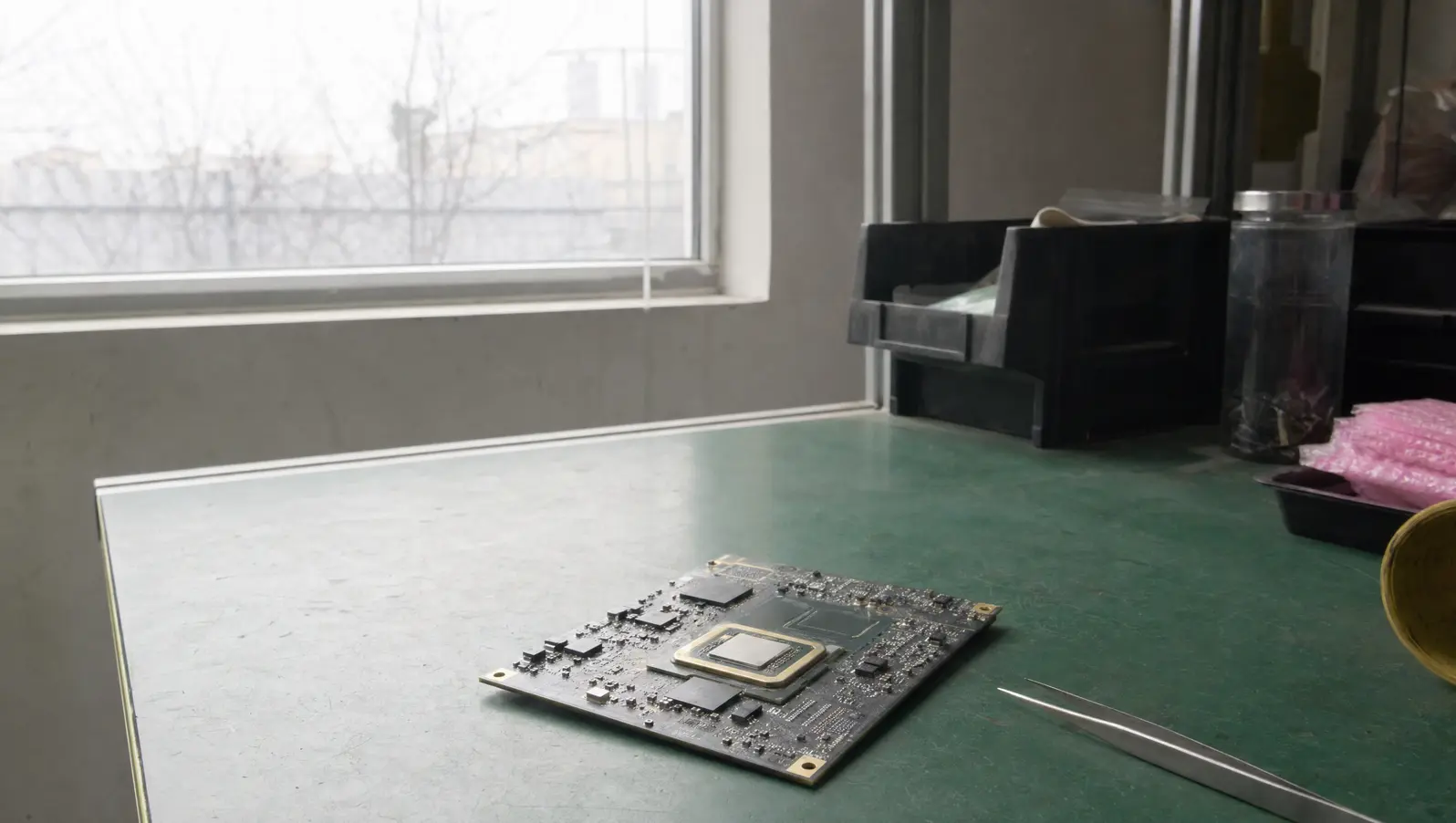
An iSIM has no physical presence of its own. The credentials that identify a device on a mobile network are held inside the SoC, short for system on a chip: the single chip that already carries the processor and the cellular modem, and now carries the SIM's functions too.
An eSIM is the step before. It is still a real chip, just one soldered permanently to the circuit board instead of sliding into a slot. The three form factors in use today are easier to compare side by side.
| Form factor | Where the SIM lives | What it removes | Where you meet it |
|---|---|---|---|
| Removable SIM | A plastic card in a tray | Nothing | Phones, routers and terminals where the card is swapped by hand |
| eSIM | A chip soldered to the board | The card and the slot, but keeps a separate chip | Wearables, cameras and compact IoT devices |
| iSIM | Inside the main SoC | The card, the slot and the separate SIM chip | Hardware whose connectivity is fixed at design time |
Each step folds the SIM into fewer and smaller parts, until it disappears into silicon the device needs anyway.
Why a smaller SIM changes what can be connected
The main gain is space. A card, a tray and the mechanism that holds them take up room a small device cannot spare. Once the iSIM absorbs all three, the connectivity footprint on the circuit board shrinks to nothing.
That is what makes new categories possible. A tracking label can lie flat on a parcel in transit and report where the item is, with no bolt-on tracker to charge, pair or lose. Smart glasses can carry a cellular connection in the frame. Watches, standalone augmented and virtual reality headsets and other wearables fit a connection without a housing big enough for a tray.
For teams running field devices, the freed room is often worth more than the parts removed. The volume the SIM mechanism occupied can go back to the battery, the antenna or the enclosure: smaller devices, longer battery life, or both.
Lower power draw, longer battery life
An iSIM has no processor of its own to feed. It draws power from the SoC it lives in, and because it does only what a SIM needs to do, it adds little to the chip's overall consumption.
On a battery device that matters twice over. A sensor that reports a few readings an hour spends almost its whole life idle, so standby draw, not transmission, sets how long the battery lasts. Every fraction of power saved at rest becomes extra runtime, and runtime becomes longer intervals between charges and fewer site visits.
The same economy runs through the rest of small-device design. Where the heavy processing happens in the cloud, game streaming being the obvious case, the device in the hand mostly displays results, so it can be thinner and lighter on power. Low-power wide-area (LPWA) networks, the mobile standards built for devices that send small amounts of data and must run on a battery for years, carry the same idea into IoT: LTE-M and NB-IoT handle the modest traffic of meters and sensors, and rising data speeds with 5G let small, low-power hardware lean on remote processing rather than carrying it locally.
Why credentials inside the chip are harder to get at
With an iSIM there is no card to pull out. The credentials that identify the device on a network are embedded in the SoC, so they cannot be physically extracted or moved to another device the way a removable card can.
A removable SIM is portable by design, and portability is a risk when devices sit unattended in vehicles, cabinets and remote sites. Embedding the identity removes that portability, and the security can be shaped to what the device needs or its manufacturer prefers, rather than to what a standard card offers. For an estate of unattended trackers and sensors, one fewer removable part is one fewer thing to tamper with.
Where the iSIM fits in a connectivity plan
An iSIM is decided at design time, not by the fleet manager afterwards. Because the SIM functions are part of the chip, a device either arrives with them or never will, and hardware already in the field cannot be retrofitted.
That is worth knowing when new hardware is on the buying list, and worth raising with the manufacturer. It changes nothing about the day-to-day job of keeping devices online. The form factor decides where the credentials live. It does not decide which networks the device can reach, whether it roams when a signal fades, or how quickly a fault is noticed. Those come from the connectivity behind the SIM and from where the fleet is managed: on RAAD™, the DigitalSom IoT platform, each SIM sits beside the device it is fitted to, so signal, roaming state and faults stay visible in one place.
Common questions
Is an iSIM the same thing as an eSIM?
No. An eSIM is a separate chip soldered permanently to the circuit board. An iSIM has no chip of its own, because its functions are part of the main SoC. Both do away with the removable card and its slot.
Does an iSIM device still connect to ordinary mobile networks?
Yes. The form factor changes where the credentials are held, not how the cellular radio works. The device still attaches to mobile networks, and the strength of the signal where it stands decides whether it reports.
When should an operations team care about iSIM?
When new hardware is being specified and size or battery life is tight: parcel tracking labels, wearables, compact sensors and similar designs. For devices already in the field, the priorities are unchanged: reach, roaming and visibility.
How Cloud-IQ approaches this
Cloud-IQ is the DigitalSom group's global IoT connectivity business. We keep devices online across 190+ countries and 800+ mobile networks, and we sell, deploy and support RAAD, the DigitalSom IoT platform.
The form factor is settled when the hardware is designed, but the reach behind it is not. Our multi-network SIMs and eSIMs work across 800+ networks in 190+ countries in place of a SIM per country, and unsteered roaming holds each device on the strongest available signal. Every SIM is managed on RAAD beside the device it is fitted to, and engineers are on call 24/7 to tell a SIM fault from a network fault. Request a quote.