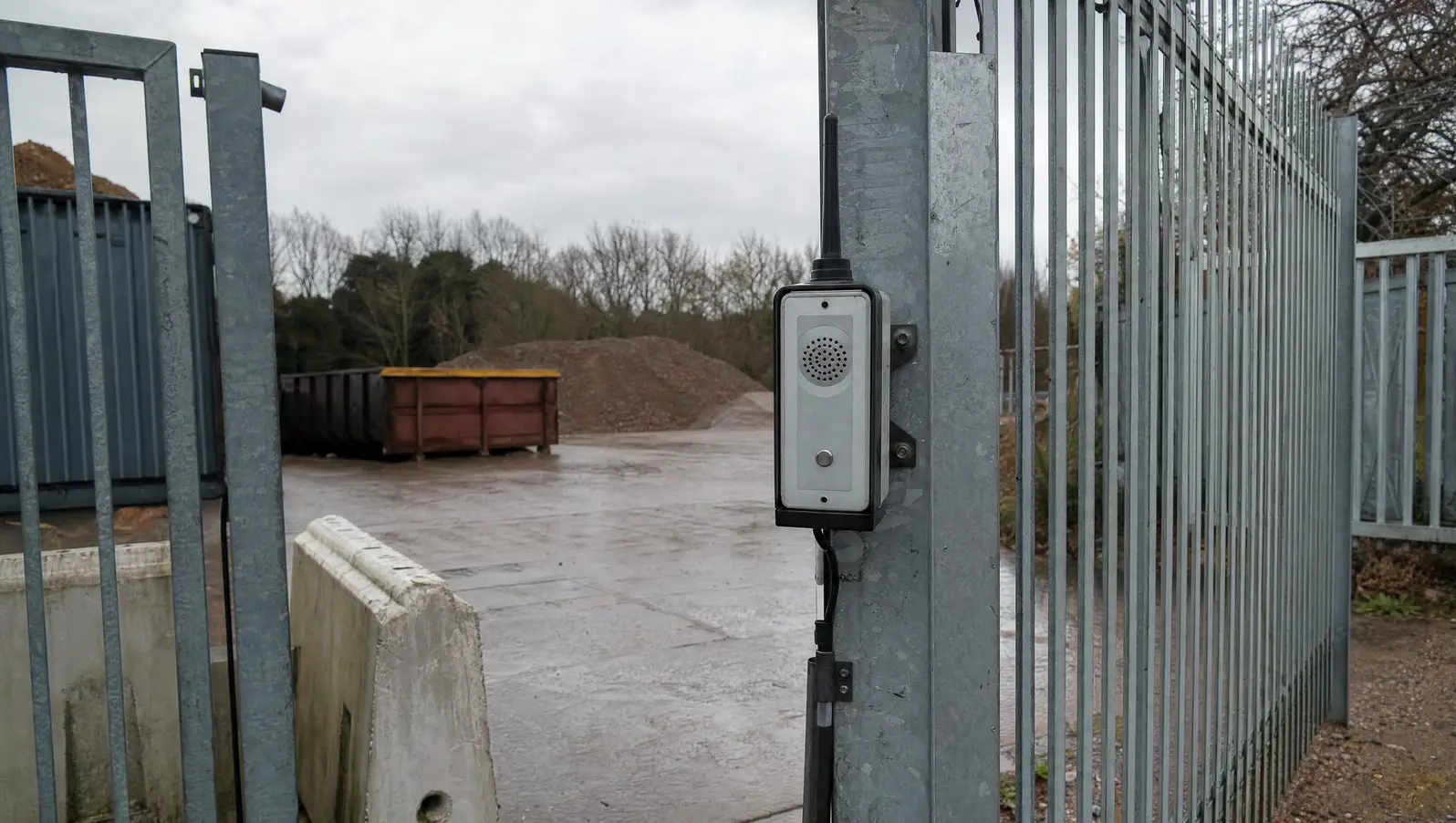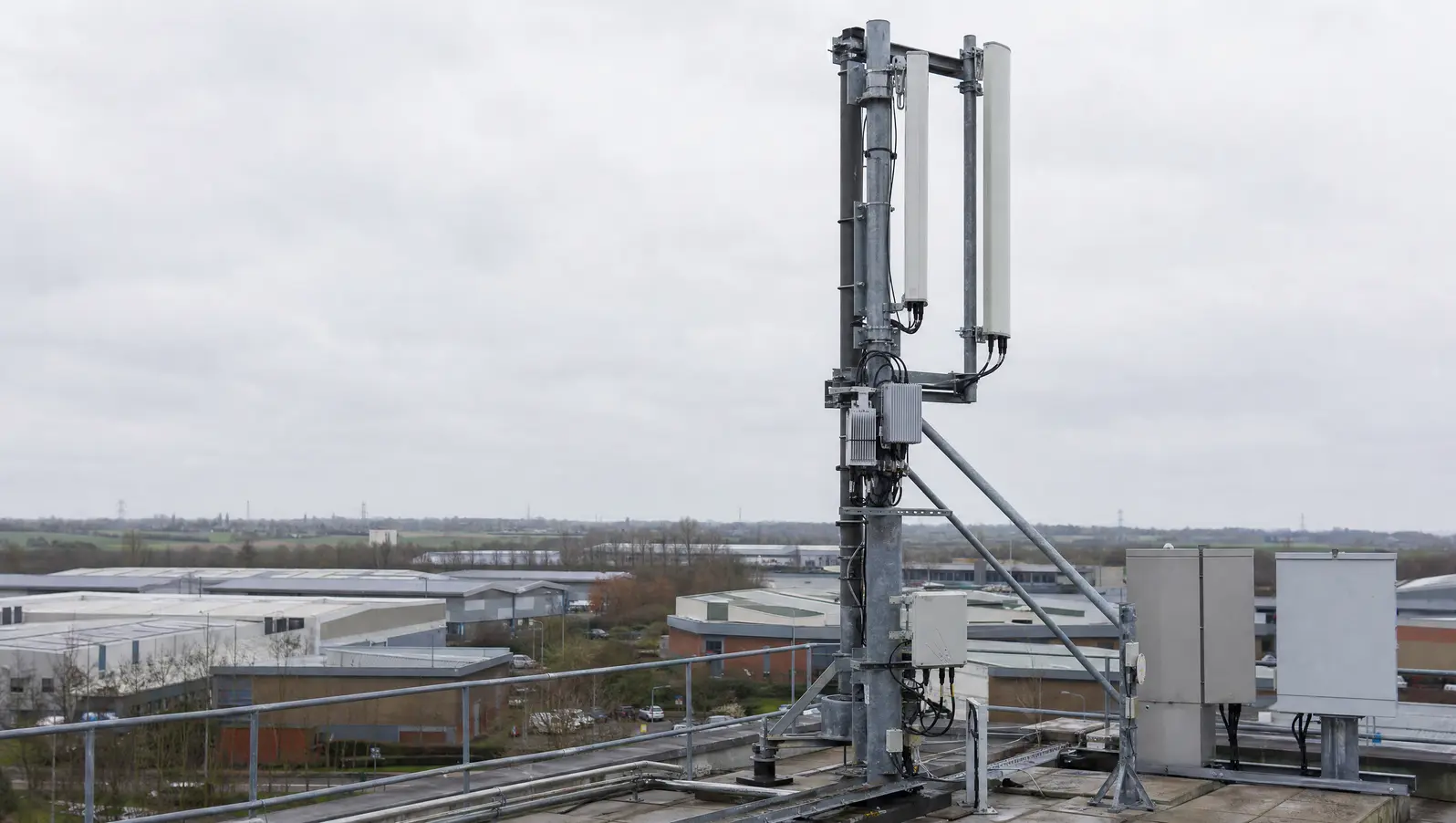



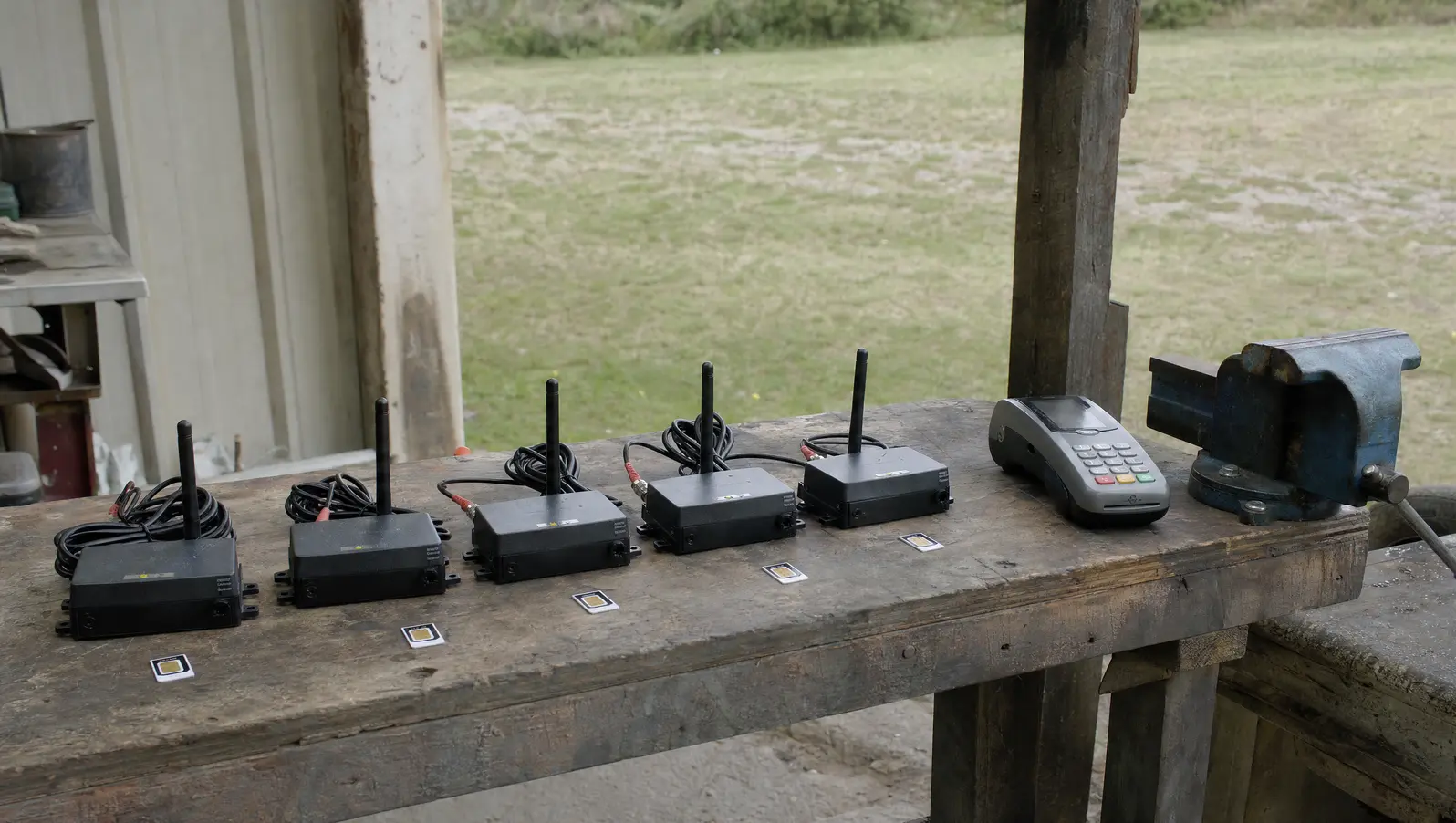
A ten-year industry forecast puts active devices at 39.9 billion in 2033, up from 16.1 billion at the end of 2023, and cellular IoT connections at 7.5 billion, up from 1.9 billion. If your team runs trackers, meters, cameras or payment terminals, that growth arrives as more SIMs to keep online.
Cellular IoT connections and LPWA grow fastest
Short-range technologies such as Wi-Fi and Bluetooth will still carry most connections in 2033, but the fastest growth sits with the radios that leave the building. Short-range falls from 79% of connections at the start of the period to 73% in 2033, while cellular grows from 1.9 billion connections in 2023 to a projected 7.5 billion in 2033.
Low power wide area, or LPWA, covers radios built to send small amounts of data over long distances on very little power. Unlicensed options such as LoRaWAN grow from 360 million connections in 2023 to more than 2 billion by 2033 on the same projections. Licensed low-power options such as LTE-M and NB-IoT are counted within cellular, so the low-power picture is bigger than those figures suggest.
For an operations team the practical point is simple: the devices that need managed connectivity are the ones growing quickest. These are the devices that move or sit in the field rather than in an office. A camera on a building, a meter in a basement and a tracker on a trailer all need a network they can reach.
Why most field devices will not use full 5G by 2033
5G reaches 5.5 billion connections by 2033 in the forecast, but most of those use mMTC rather than the full standard. mMTC, or massive machine-type communications, is the lean variant of 5G designed for very large populations of simple, low-power devices. Only 1.1 billion connections are projected to run full 5G New Radio, the high-throughput version of the standard, and vehicle head units alone account for 41% of those in 2033.
So match the radio to the job. A payment terminal sending transaction batches does not need the bandwidth of a streaming camera, and a battery-powered sensor needs years of battery life more than megabits. Specifying 5G for everything buys headroom most devices will never use.
The spend shifts from megabytes to management
Total IoT expenditure, covering modules, value-added connectivity and the applications around them, grows from USD 335 billion in 2023 to a projected USD 934 billion in 2033. Value-added connectivity should make up 10% of that expenditure in 2033, and modules a further 4%. The phrase means services layered on top of raw data transport: diagnostics, security, coverage visibility and device management.
Moving bytes is a small slice of what a fleet costs to run, and the slice shrinks as estates grow. Budgets built only around data volumes miss where the real money goes, which is finding out which device went dark, why, and who is going to fix it.
Field devices cluster in a handful of verticals
Consumer devices will account for 61% of all connections in 2033; the operational load sits in the other verticals. The forecast splits the rest of the market as follows.
| Vertical | Share by 2033 | Devices the forecast names |
|---|---|---|
| Cross-vertical applications | 35% | Track and trace, office equipment, fleet vehicles |
| Utilities | 24% | Smart meters |
| Retail and wholesale | 22% | Payment processing devices, electronic shelf labels |
| Government | 7% | Not itemised |
| Transport and logistics | 4% | Not itemised |
| Agriculture | 3% | Not itemised |
Most people running device estates will find their own fleet somewhere in this table. The verticals differ, but the problem is shared: devices sit in basements, vehicles, fields and shop floors, far from the IT team, and each depends on a connection nobody watches until it drops.
Three regions hold 72% of the market value
China, North America and Europe are projected to hold 32%, 21% and 19% of total IoT market value in 2033, or 72% between them. Concentration of value is not concentration of devices. Components are built in one region, assembled in another and deployed in a third, and many fleets cross borders daily.
Planning connectivity country by country does not survive that pattern. A SIM tied to one operator per market means a separate procurement exercise, commercial agreement and fault process for every country the estate touches. Coverage varies between streets, let alone countries, so the ability to register on whichever network is strongest matters more than any coverage map.
What to settle before the fleet grows
Growth at this pace rewards teams that settle a few connectivity decisions early instead of one per deployment.
- Match each device class to a radio based on bandwidth, power draw and mobility, not on the newest headline technology.
- Standardise on multi-network SIMs or eSIMs, so every device can register on the strongest available network wherever it ends up.
- Pool data across the estate instead of fixed allowances per SIM, so quiet meters subsidise chatty cameras.
- Keep each SIM's network, signal and roaming state beside the record of the device it is fitted to, so a coverage drop is caught before the device goes dark.
- Agree who answers the phone at 3am, and what diagnostic detail they can see down to the last network and cell the SIM used.
That fourth decision is where platform choice matters. On RAAD™, the DigitalSom IoT platform, each SIM sits in the same record as the device it is fitted to, with its network, signal and roaming state alongside. Coverage problems then surface as alerts instead of silent drop-offs.
Common questions
Do new device deployments need 5G?
Most do not. Only 1.1 billion of the projected 39.9 billion devices in 2033 run full 5G New Radio, and vehicle head units make up a large share of those. Reserve full 5G for devices that stream video or need the throughput, and let the rest ride on 4G, LTE-M, NB-IoT or an unlicensed LPWA radio.
Will 4G devices still work at the end of the decade?
The projections say yes. With only 1.1 billion full 5G New Radio connections among a projected 39.9 billion devices in 2033, the overwhelming majority continue on other radios. 4G LTE remains the workhorse for field devices.
Is LoRaWAN a substitute for cellular connectivity?
It depends on what the device does and where it goes. Unlicensed LPWA suits dense, static deployments under a single owner, where traffic is small and the geography is fixed. Cellular suits devices that move, cross borders or need managed roaming and support, which is why both grow side by side in the forecast.
How Cloud-IQ approaches this
Cloud-IQ is the DigitalSom group's global IoT connectivity business. We keep devices online across 190+ countries and 800+ mobile networks, and we sell, deploy and support RAAD, the DigitalSom IoT platform. A decade of growth at this pace is easier to absorb with one multi-network SIM per device instead of a SIM per country, unsteered roaming that keeps each device on the strongest signal, and tariffs whose data pools across the whole estate. Every SIM sits on RAAD beside the device it is fitted to, and engineers are on call 24/7 to tell a SIM fault from a network fault. Request a quote.