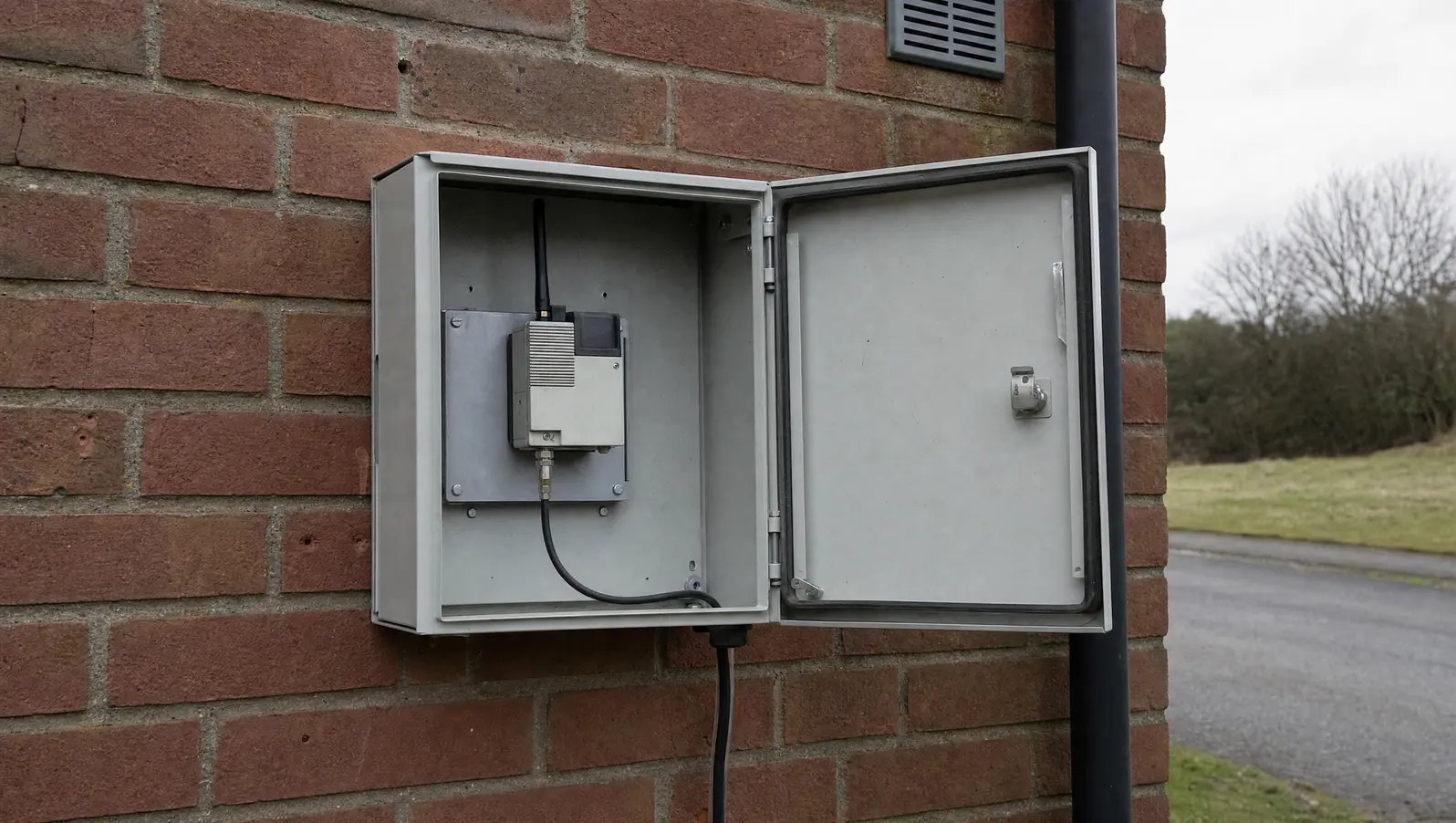




A packet gateway is a bridge between your telematics devices and the systems that consume their data. It sits in the path from vehicles, sensors and trackers to the cloud, deciding what gets sent, when, and over which network. For a fleet, that middle layer turns thousands of noisy device streams into one manageable flow.
Why telematics data needs a gateway at all
A single vehicle can generate diagnostics, location fixes, driver-behaviour events and sensor readings all day long. Multiply that by a few hundred assets and the raw volume quickly outgrows what any fleet operator wants to pay to move.
The data itself is useful, but little of it needs to travel in real time. Engine temperature trending upward over an hour matters; a hundred identical readings that say nothing changed do not. Left unfiltered, they consume bandwidth and money on both sides of the link.
A packet gateway does this filtering at the network edge. It aggregates readings, drops the duplicates and passes on what the backend actually needs.
Filter, aggregate, prioritise
The core job of a packet gateway in telematics is traffic shaping. Instead of letting every device fire data the moment it is generated, the gateway decides what is urgent and what can wait.
- Filtering removes data the backend will never use, such as repeated identical readings from a sensor at rest.
- Aggregation bundles many small readings into fewer transmissions, which is cheaper and more efficient over cellular.
- Prioritising puts safety-relevant events, like a panic alert or a geofence breach, ahead of routine status updates.
The result is a network that carries only essential information. Congestion drops, and the backend receives a cleaner feed instead of raw device chatter.
Why filtering saves money as well as bandwidth
Data cost in a telematics estate scales with volume, and volume is what a gateway exists to control. When the gateway consolidates readings and passes on only the critical information, the amount of billable data falls with it. This matters most where bandwidth is limited or transmission is expensive, such as assets roaming across borders.
A gateway leaves the price of your tariff alone. What it changes is how much of that tariff you consume, and that is often the easier lever to pull.
Battery life on remote assets
Many telematics devices run on battery, whether they are trailer trackers, asset tags or standalone sensors. Every radio transmission costs power, and devices that transmit constantly drain themselves flat long before their useful life is over.
By cutting transmission frequency and batching data, a packet gateway stretches the interval between charges or battery replacements. That means fewer site visits to swap batteries, a direct operational saving when assets are scattered across a region.
One security point instead of a thousand
Telematics data is sensitive: vehicle locations, driver behaviour and sometimes customer information all travel across that link. A gateway gives that traffic a single, controlled point of passage rather than many direct connections.
Gateways typically handle encryption of the data in transit, firewall-style controls over what may pass, and authentication so the backend only accepts traffic from devices it knows. As the middle layer, a gateway protects the backend from devices and the devices from the wider network.
Keeping vehicles connected across network types
A vehicle in transit crosses network boundaries by default. It moves between cellular networks, and in some deployments between cellular, Wi-Fi and low-power wide-area technologies. A telematics system that assumes one network type will stall the moment the vehicle leaves that network behind.
A packet gateway supports multiple connectivity protocols and hands traffic between them as conditions change. Combined with a multi-network SIM, this is what keeps the data flowing on a moving asset. One handles the radio side, the other the protocol side, and the vehicle never stops reporting because it changed towers.
Centralised troubleshooting
When a telematics estate grows, working out why a device went quiet gets harder. Is it the device, the network, or the path between them? A gateway gives you one centralised place to watch data flows and isolate faults.
Centralised visibility matters just as much on the SIM side. Knowing which network a SIM is on, what its signal looks like and whether it is roaming turns a blind outage into a diagnosis.
Common questions
Do I need a packet gateway for a small telematics fleet?
Probably not at first. A handful of devices reporting straight to a cloud endpoint is simple enough to manage. Gateways earn their place as device count grows, data costs mount and troubleshooting becomes a regular task.
Is a packet gateway the same thing as a multi-network SIM?
No. The SIM determines which networks the device can reach, and a multi-network SIM can reach several. The gateway manages how data travels once a connection exists: filtering, aggregating and securing it. Most mature telematics estates use both.
Does a gateway add latency to telematics data?
A well-designed gateway adds negligible delay, and it often reduces effective latency overall, because priority traffic moves to the front of the queue and congestion on the backend link drops.
How Cloud-IQ approaches this
Cloud-IQ is the DigitalSom group's global IoT connectivity business. On the SIM side, we provide one SIM that works across 800+ mobile networks in 190+ countries, with unsteered roaming that keeps a moving vehicle on the strongest available signal.
Tariffs are built around the countries and data your estate actually uses, with data pooled across the fleet and SIMs free to move between tariffs. Every SIM sits alongside the devices it serves, managed on RAAD™, the DigitalSom IoT platform, so you can see each SIM's network, signal and roaming state before anything goes dark.
Engineers are on call 24/7 and can separate a SIM fault from a network fault using cell-tower insight. To put the connectivity underneath your telematics gateway in order, Request a quote.