


Off-grid IoT connectivity is decided by coverage, not by the sensor on the roof or in the soil. A SIM tied to one operator works only where that operator has towers, and remote regions are exactly where a single network thins out. Multi-network SIMs with unsteered roaming are what keep a remote fleet reporting.
Where off-grid IoT already earns its keep
Millions of people in rural Africa live without reliable mains power, clean water or healthcare nearby, and connected devices are narrowing those gaps. The pattern holds across every use case: a small payload, sent at regular intervals, from a place with no infrastructure around it.
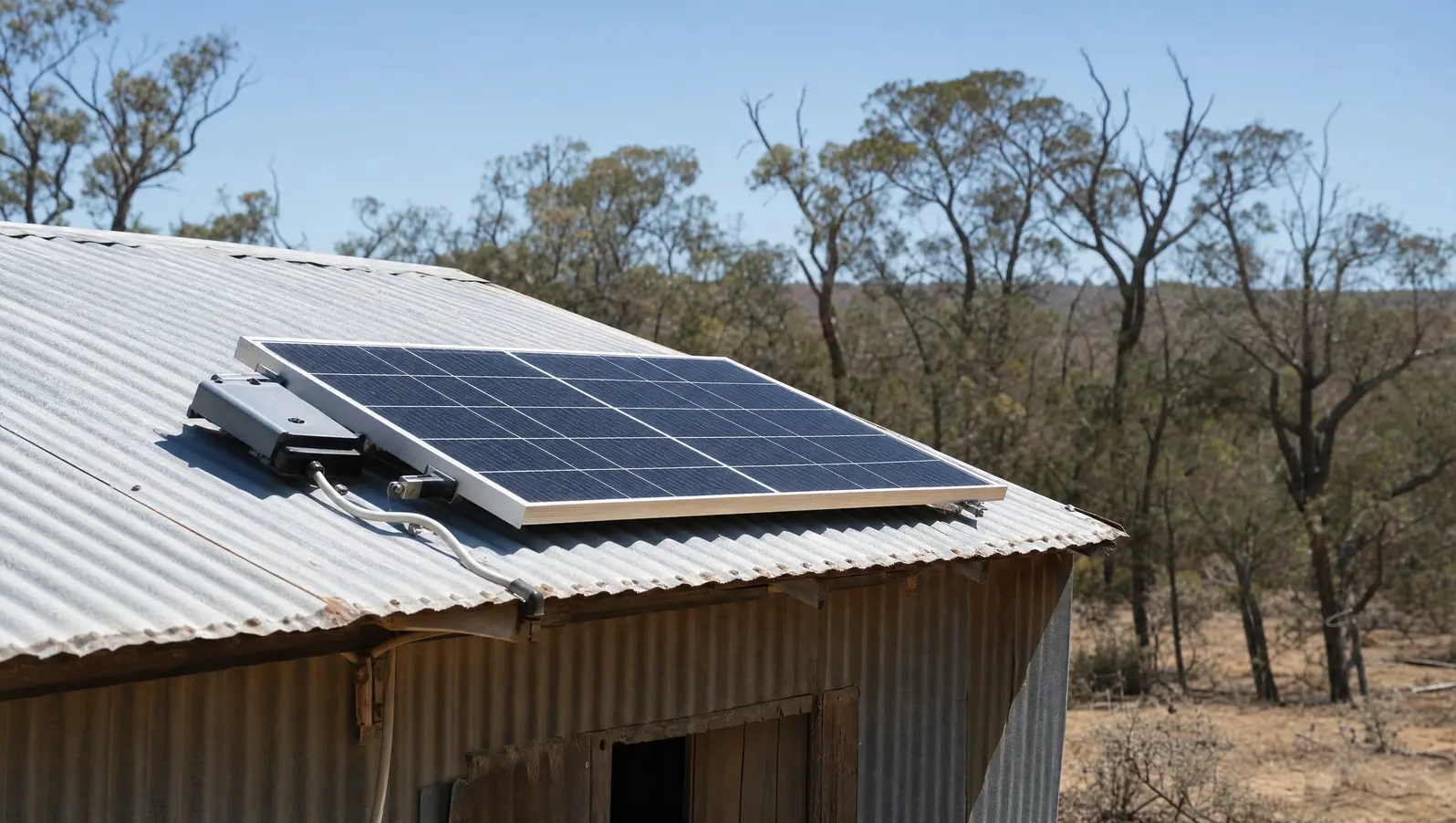
Start with energy. Kerosene lamps burn fuel badly and carry a real fire and health risk, and solar systems are replacing them across the continent. A solar array with a connected controller reports its own production and the household's consumption, so the operator spots a failing battery or a dirty panel from the data rather than from a site visit.
Water systems work the same way. Sensors on pumps and distribution lines report levels, quality and leaks as they happen, so a leak is flagged and fixed before a community runs dry.
Agriculture anchors many African economies, and remote sensing suits it well. Soil moisture probes, weather stations and crop monitors supply the data that sets irrigation schedules and cuts avoidable losses, often from fields far from any tower.
Healthcare raises the stakes. Wearables and medical sensors in remote clinics track vital signs and send them to practitioners elsewhere, so problems surface early enough to act on.
Disaster response follows the same pattern. Floods and droughts recur across much of the continent, and early-warning sensor networks give at-risk communities time to move. Drones can then assess damage before roads are passable.
Why a single-network SIM strands remote devices
An off-grid device depends on whatever coverage exists at its coordinates. Networks are built around population density, so a rural site often sits at the edge of one operator's footprint, or in the gap between several.
Coverage measured at installation is a snapshot, not a contract. Cells congest, go down for maintenance, or get retuned when operators upgrade. A device that can only see one network has no answer to any of that. It goes dark, and stays dark until someone fixes a fault nobody knows about.
Off-grid, the three SIM types behave very differently.
| SIM type | How the network is chosen | What happens when signal fades | Where it makes sense |
|---|---|---|---|
| Single-network | One operator, no choice | The device goes offline until coverage returns | Dense areas where one operator is reliably strong |
| Multi-network, steered | An ordered list of preferred partner networks | The device clings to a weak preferred network before trying others | Estates that can tolerate occasional outage |
| Multi-network, unsteered | The strongest network the device can see | The device moves to the next strongest network | Remote estates where every reading matters |
How unsteered roaming keeps a device on the strongest signal
Unsteered roaming means the device, not the provider's partner list, decides which network it sits on. Many multi-network SIMs are steered: the provider ranks its partner networks and pushes devices onto them in order. If a preferred partner has a weak cell at the site while a non-preferred network is strong nearby, the device stays on the weak one, dropping readings and draining its battery.
Unsteered is the opposite. The device registers on the strongest network it can see, and moves when that signal fades. At any moment it sits on the strongest link physically available. Off-grid, that is the behaviour an estate needs, because nobody is on site to reset a modem or swap a SIM.
What off-grid IoT connectivity demands beyond coverage
Once a device can reach a network, the commercial model decides whether the fleet stays manageable as it grows. A rural estate never uses data evenly: some devices report every few minutes, others sit quiet for long stretches and then burst. Fixed per-SIM allowances waste data on the quiet devices while the busy ones run short. Pooling data across the estate fixes that, because the pool draws on what the fleet collectively uses rather than on what each SIM was guessed to need.
Tariffs deserve the same attention. An estate spread across countries and networks rarely fits one flat plan. A tariff built around the countries, networks and data volumes the fleet actually uses, with SIMs free to move between tariffs, cuts the month-end spreadsheet work that large fleets otherwise generate.
Catch a failing SIM before the device goes dark
The expensive fault in a remote fleet is the one nobody notices for a week. By the time a device has gone dark, the usual response is a site visit. The alternative is coverage intelligence: knowing which network every SIM is on, its signal strength and its roaming state. A SIM drifting between networks shows up in that data before the device fails.
That visibility belongs with the rest of the estate, on RAAD™, the DigitalSom IoT platform, where SIMs sit beside the devices they are fitted to. The SIM lifecycle runs there too: activate, suspend, monitor and bill in one place. When something in the field goes quiet, the SIM is the first thing worth checking, and the same view gives the answer.
Common questions
Do off-grid devices need 5G?
Mostly, no. A soil probe or a pump controller sends a few lines of data; reach, battery life and finding any usable network matter far more than peak speed. High-bandwidth devices such as connected cameras are the exception, and they still depend on coverage at the site.
Can one SIM serve a fleet that crosses borders?
Yes. A multi-network SIM is built for this: it registers on whatever partner network is available in each country, so an estate spanning several markets does not need a SIM per country. Pooled data follows the fleet rather than the border.
What should happen when a remote device stops reporting?
Establish first whether the SIM or the network is at fault. Cell-tower insight, the record of which network a SIM last registered on and at what strength, separates the two quickly and prevents a wasted site visit. Estates with engineers on call around the clock get answers without waiting for the next business day.
How Cloud-IQ approaches this
Cloud-IQ is the DigitalSom group's global IoT connectivity business. We keep devices online across 190+ countries and 800+ mobile networks, and we sell, deploy and support RAAD, the DigitalSom IoT platform.
Off-grid estates are where a multi-network SIM proves itself: one SIM across 800+ networks in 190+ countries rather than a SIM per country, and unsteered roaming that keeps every device on the strongest available signal. Tariffs are built around the countries and data the fleet actually uses, with data pooled across the estate, and every SIM is managed on RAAD beside the device it is fitted to. When a device goes quiet, our engineers are on call 24/7 and can tell a SIM fault from a network fault. Request a quote.